
One Team. One Timeline.
The way most print partners fail you.
Most print-production failures don’t happen at the press. They happen at the hand-offs.
A designer ships a file to a printer. The printer ships output to a finisher. The finisher ships to a kitting house. The kitting house ships to a logistics provider. The logistics provider ships to an install crew the printer has never met. Five vendors. Four hand-offs. And every hand-off is a place where a deadline can slip, a color can drift, a SKU can land in the wrong city, or a crew can show up to a loading dock with the wrong gear.
When everything goes well, the chain holds and the job lands. When it doesn’t, the question of who owns the problem is the most expensive question in print production. In a vendor chain, the answer is “everyone and no one.” In our model, the answer is a name and a phone number.
APX is built differently on purpose. Prepress, large-format print, fabric production, rigid fabrication, kitting, fulfillment, logistics, installation, and post-event strike are all in-house. Three production hubs in Los Angeles, Las Vegas, and Orlando. One accountable team for the entire arc of the work.
No outsourcing. No vendor chain. Full control of quality, timelines, and execution under our roof.
Concept to final execution. Eight steps. One building.
Every project moves through the same eight-step process, managed internally end-to-end.
01. Prepress and color management. Files reviewed, profiled, and matched to substrate. Every job calibrated against a Barbieri spectrophotometer before press time so what comes off the line matches what was approved on screen.
02. Large-format print production. EFI VUTEk GS3250LX Pro, VUTEk 5r+, and VUTEk h5 systems handle rigid and roll across vinyl, fabric, banner, and premium substrates. Multi-machine capacity for parallel runs on compressed timelines.
03. Dye-sublimation fabric production. EFI VUTEk FabriVU 340i for vibrant, seamless soft signage. Backlits, SEG, flags, stage skirts, festival arches.
04. Rigid fabrication and finishing. Zund G3 3XL precision cutting for custom shapes, dimensional letters, routed signage, mixed-media builds, trophy case interiors.
05. Kitting and fulfillment. Each piece labeled, packed, and organized by venue, zone, install crew, or store before it leaves the production floor. Not at a regional warehouse. Not by a third-party contractor. By the same team that printed it.
06. Nationwide shipping and logistics. Delivery windows coordinated to your install schedule. Not a generic carrier ETA. Tracking and accountability stays inside our system.
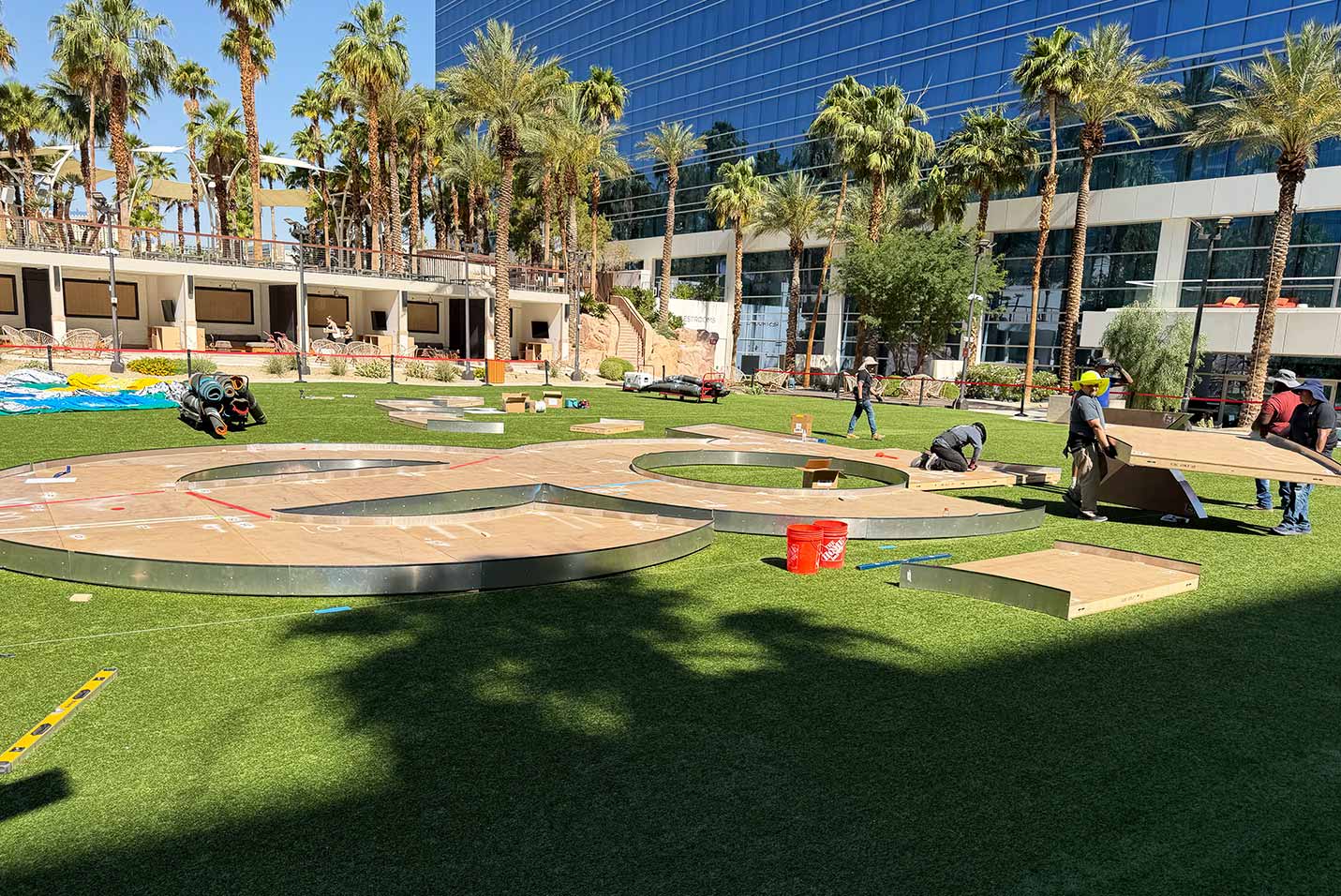
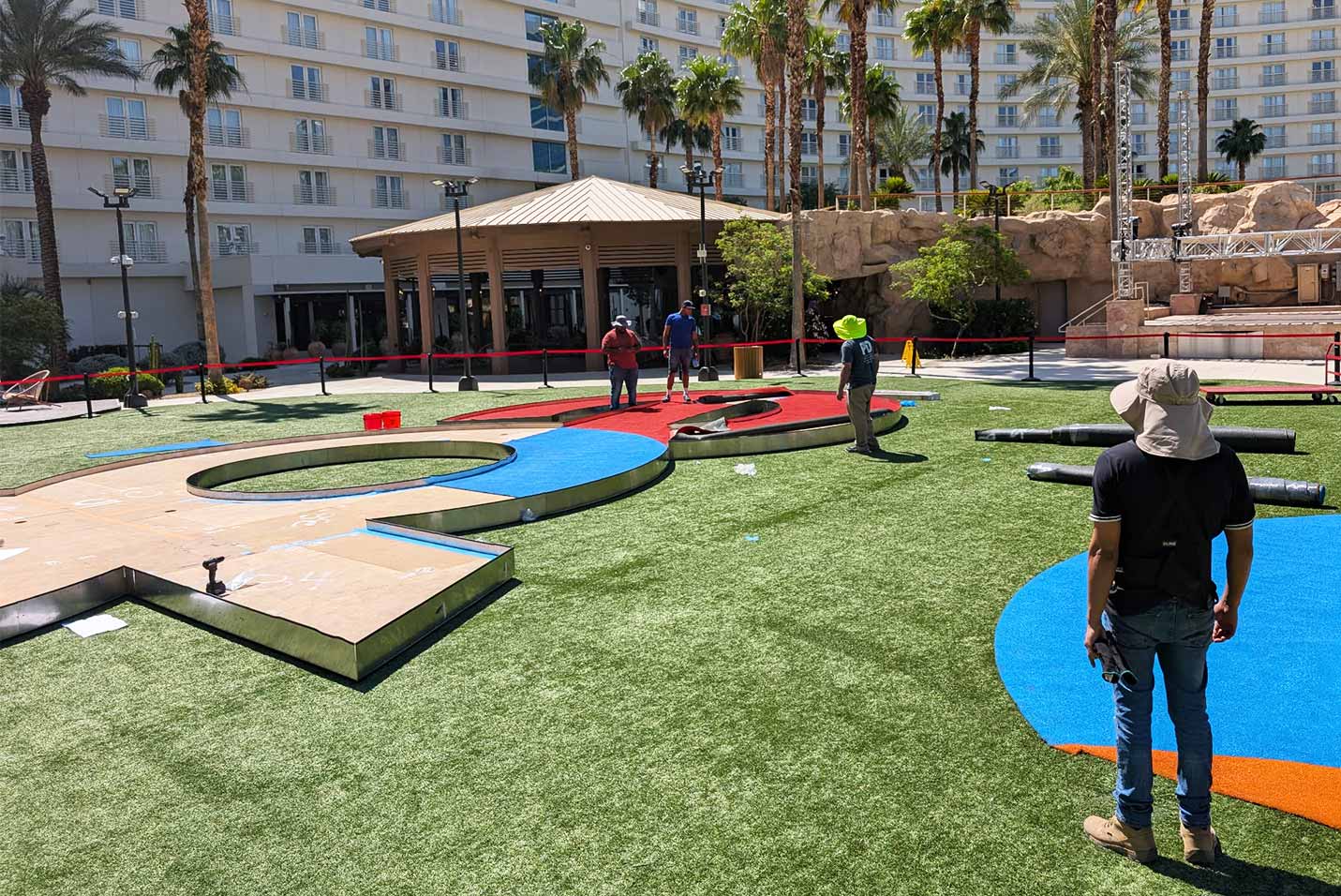
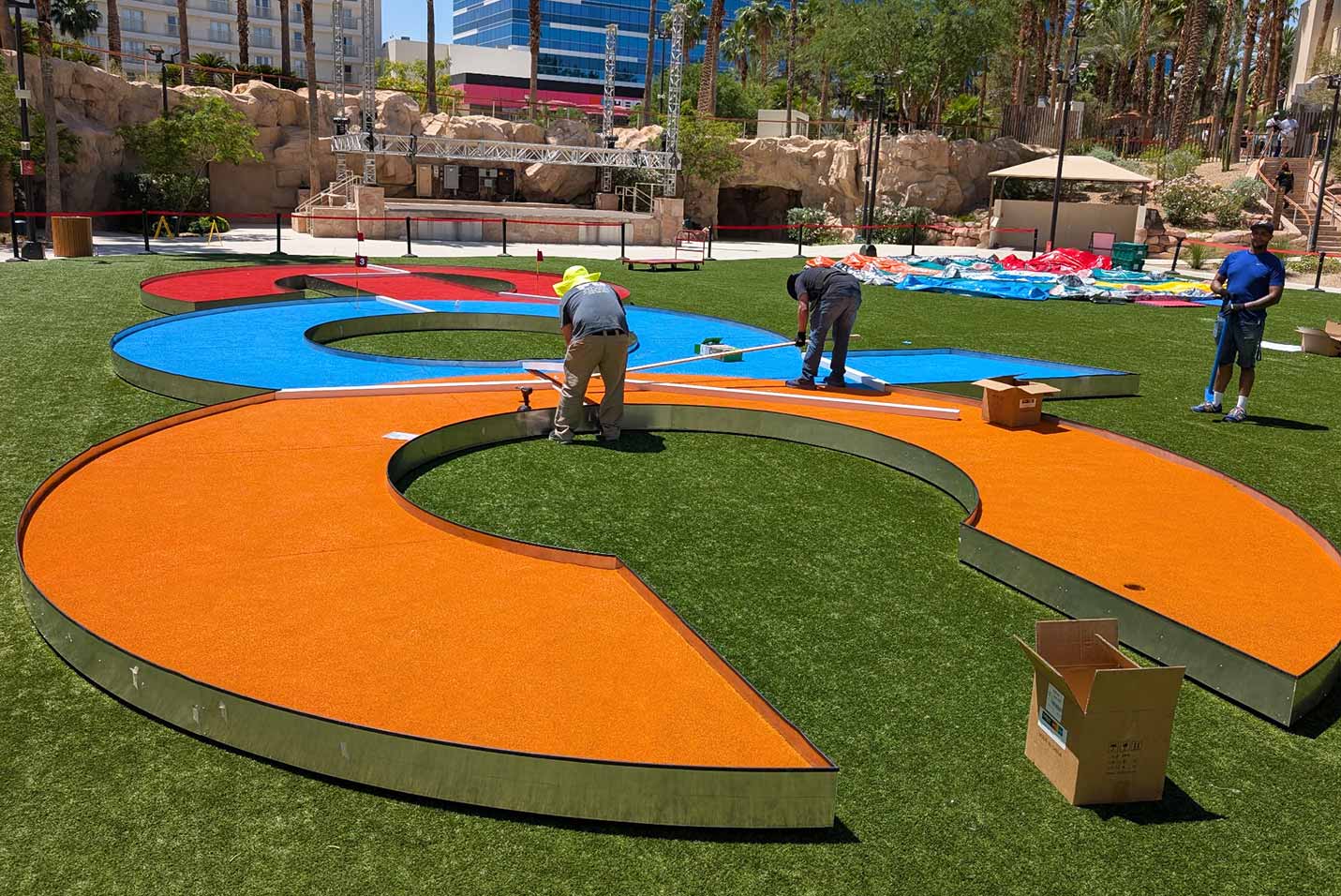
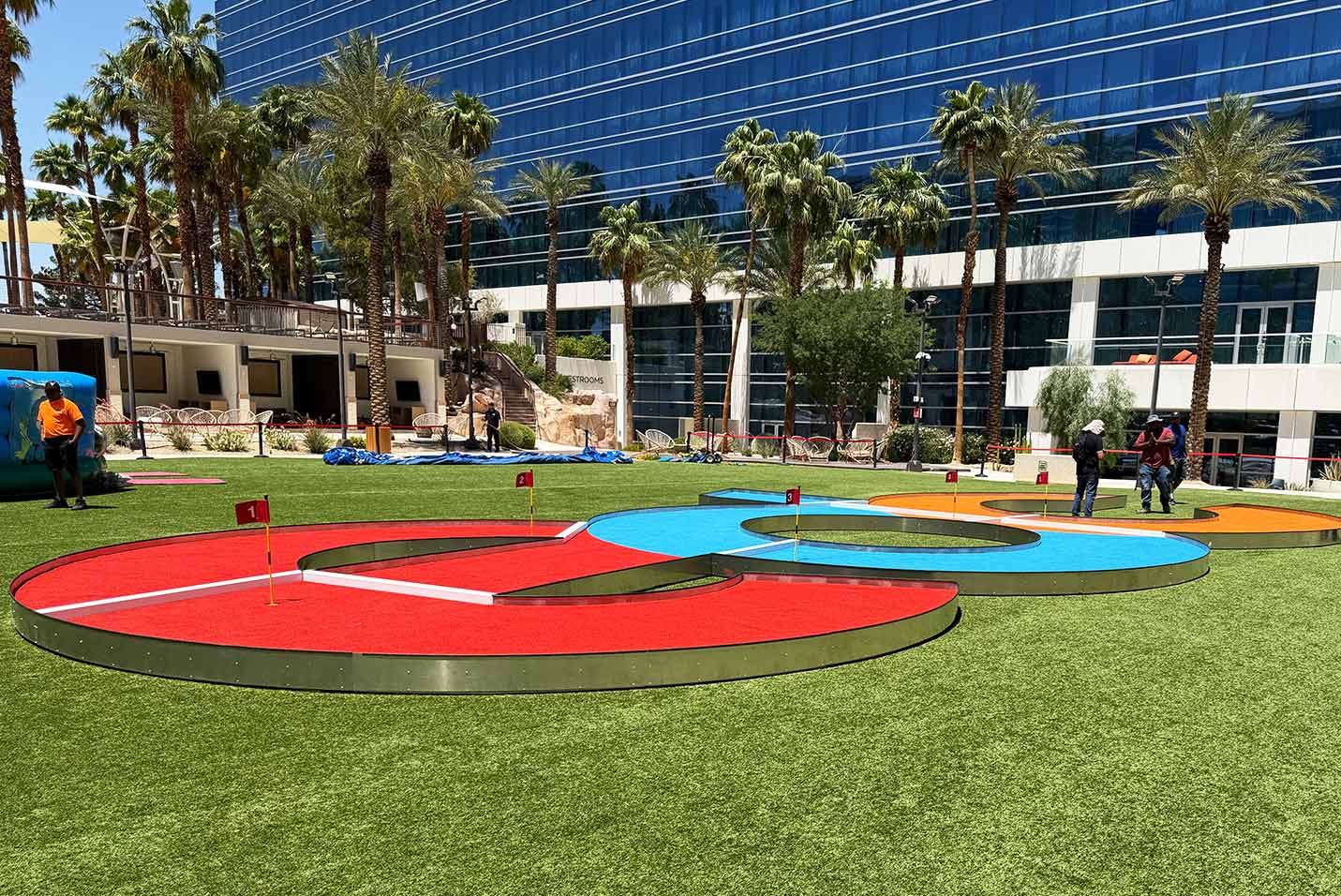
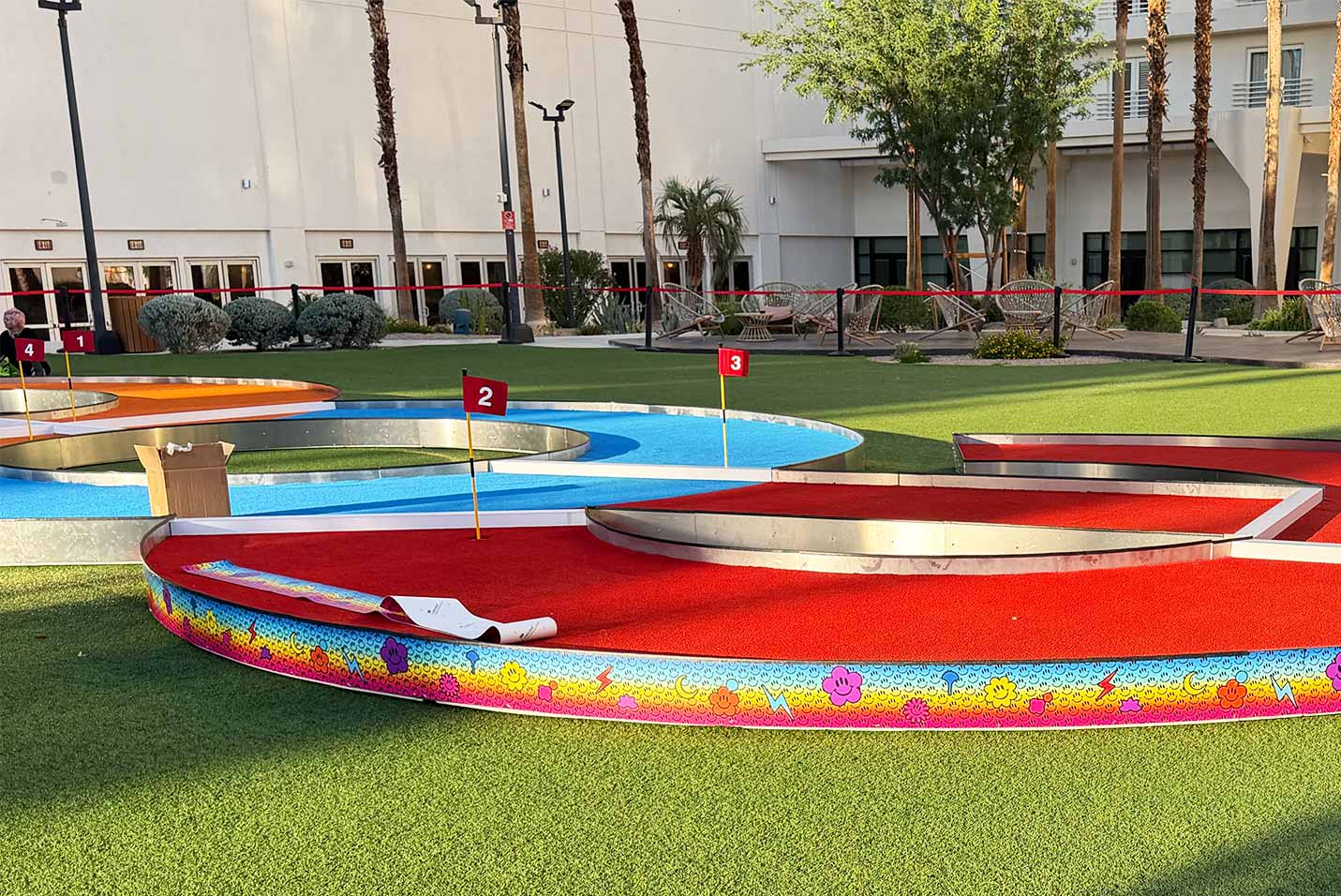
07. Professional installation. Our own crews. Our own trucks. Rigging coordination, elevated installations, structural banner and tension fabric work, overnight and rapid-turn deployment, stadium and venue graphics, multi-crew coordination for large environments.
08. Strike and post-event removal. When the event closes, we remove the graphics, recycle what isn’t reusable, and store anything you want to keep for next time.
Faster timelines.Fewer variables.Better outcomes.
What in-house actually changes.
The phrase “in-house” gets used loosely in this industry. Most print partners mean some of it: they print in-house and contract out fabric, or they print and finish in-house and subcontract installation, or they print and install in-house and outsource kitting. The chain still exists. It’s just shorter.
What changes when every step is genuinely in-house and on the same team is the speed at which problems get solved. When a revision lands Friday night, the file moves from designer to prepress to press in the same building, on the same shift, without waiting for a partner to confirm next-day capacity. When a color drifts on press, the calibration check happens in the same room as the print, not in a back-and-forth proof cycle that takes two days. When a kit needs to be re-sorted for a different install order, the kitting team is forty feet from the press that produced it.
The compounding effect is significant. A project that would take three weeks across a vendor chain compresses to ten days inside APX. A revision cycle that would take two days takes two hours. A schedule that would require padding to account for hand-off risk runs lean because there are no hand-offs.
That is the practical meaning of “one team, one timeline.” Not a tagline. A different shape of production.
Three hubs. Coast to coast.
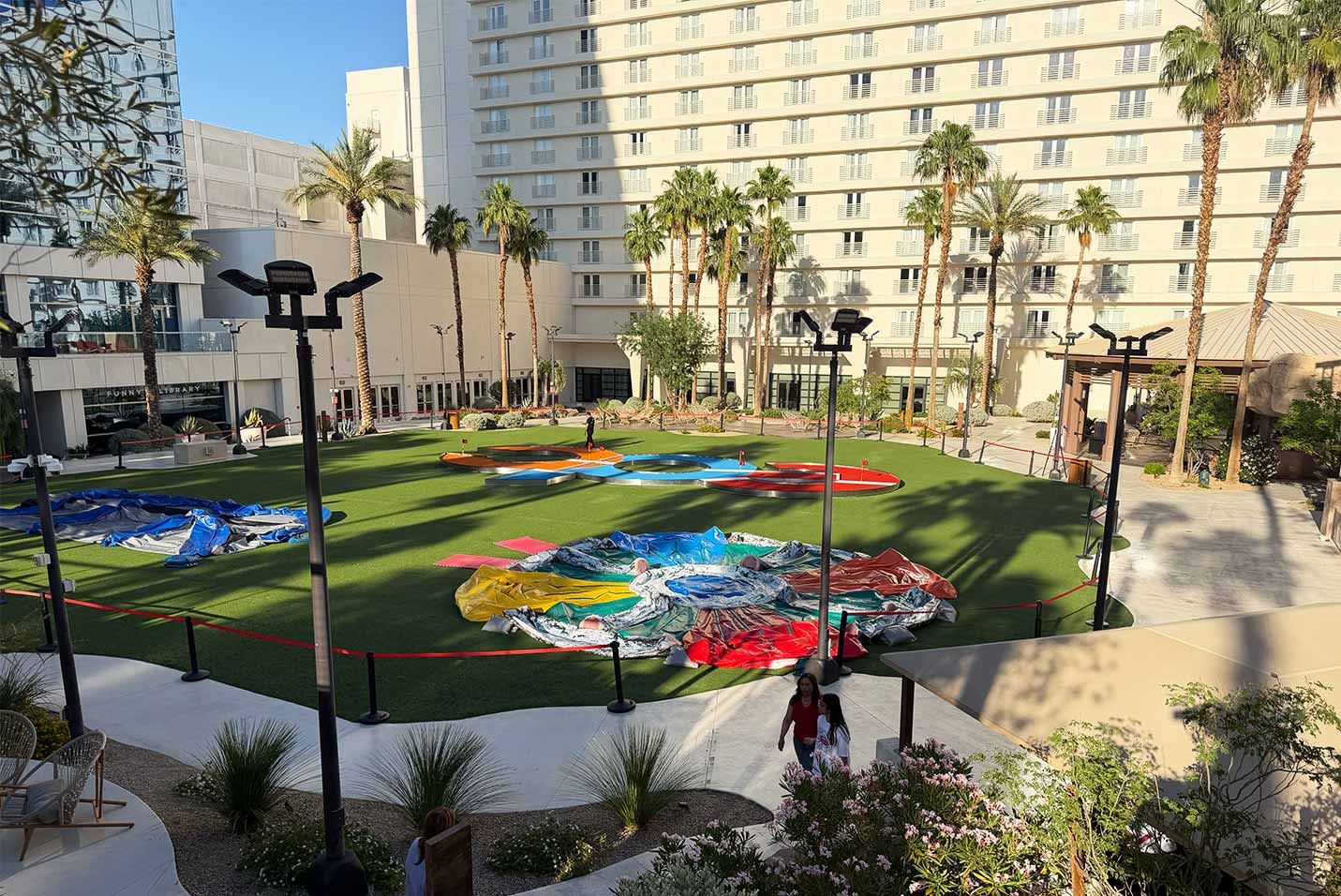
Production is distributed acrossthree hubs to support rapid deployment and large-scale rollouts in any region.Los Angeles is headquarters and primary production capacity, covering festival and entertainment work, sponsor activations, retail rollouts for the western US, and the broader EssilorLuxottica program.Las Vegas handles production and install for the convention and trade show market, large-scale venue work, and the entertainment economy that runs on a Nevada zip code.Orlando covers production and install for the southeastern US, theme park and tourism work,motorsports including Daytona, and stadium and arena coverage across Florida.
Three hubs meansa project doesn’t need to ship cross-country to start production. It means the install crew in Las Vegas is on our payroll, not a regional subcontractor. It means a Florida stadium rollout is run by a team that’s already in Florida.